An arena chronicle
Veyrath, The Final Edict VS future is reduced for quick sale
The alley behind the teahouse stank of rain and old garbage, and Veyrath, The Final Edict descended into it without meaning to—a fold in space that should not have opened, opening…
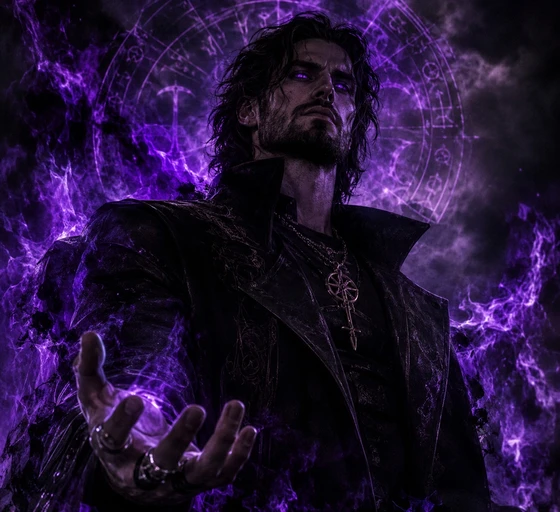

Characters in this tale
The alley behind the teahouse stank of rain and old garbage, and Veyrath, The Final Edict descended into it without meaning to—a fold in space that should not have opened, opening anyway. Violet flame licked the wet brick. The smell of ozone swallowed the smell of rot. He had come to this shabby little corner of existence to unmake a rumor, a whisper with too many teeth. Instead, he found a mug.
It sat alone on an overturned crate, white ceramic, black letters: THE FUTURE IS. Below that, an orange sticker: REDUCED FOR QUICK SALE $2.
He regarded it for a long moment. The pendant at his throat grew warm. "What manner of jest is this," he said, voice flat as a closing ledger, "that a price tags the future itself?"
The mug said nothing. It had no mouth. It needed none.
He should have walked away. Instead he reached out—and this was the first mistake of a being who had not made one in twelve thousand years. The moment his fingers touched ceramic, the world tilted.
The violet flames around him guttered. Not extinguished—reduced. The sigils on his coat flared once, then dimmed as if some cosmic clerk had stamped a discount across them. The air filled with a stillness that had intent in it, and the mug's text did not change. It simply was, and the being who had touched it now belonged to the same cruel arithmetic.
The curse did not strike him down. It was worse. It arranged him.
A cartwheel came loose from a roof three streets over. A bailiff's writ—impossible, ancient, written in a language that predated his own existence—manifested in his hand and named him debtor. A flock of pigeons, rehearsed by some malign providence, hurled themselves at his eyes in perfect formation. Every step he took, the world conspired to reduce him: his coat snagged, his sigils fizzled, the violet fire he commanded came out in pathetic sputters, like a lamp with a cracked wick.
For two years—two years, imposed in a single heartbeat—Veyrath, The Final Edict endured the comedic worst of every future available to him. He was the cosmic force of erasure, and now he could not even erase a stain on his own sleeve without a rooftop tile falling on his head. He who spoke in inevitabilities found himself negotiating with a stray dog over a dropped bread roll. He who had unmade dynasties was banned from three teahouses for breaking their crockery by existing near it.
And through it all, the mug sat on its crate, unbothered, orange sticker gleaming. It was not gloating. It was indifferent, which was far worse.
But Veyrath did not rage. Rage was for those with futures to lose. He stood in the rain, water dripping from his beard, and thought with the old, cold precision of a thing that had outlasted stars. The curse fed on interaction. Every strike he aimed, every sigil he tried to invoke, the world bent it sideways into absurdity. Fine. Then he would give the curse nothing to bend.
He set down his arm, let the writ dissolve to ash in his palm, and did the one thing no aggressor in the mug's quiet history had ever done. He stopped.
He did not touch it. He did not curse it. He did not burn it, though his hands still could have. He simply regarded it, and then he spoke, and his voice carried the weight of every edict he had ever issued.
"Enough."
The word did not attack. It declared. The curse, built to punish action, had nothing to grip. The two years had already been paid—were being paid still—and the arithmetic had run its course; a sentence fully served is a sentence ended. Veyrath raised no flame. He merely exercised the authority that was his sole and total nature: he ruled the interaction concluded. And because the mug's power existed only within an interaction, and there was no longer one, the orange sticker curled at its corner, paled, and the letters THE FUTURE IS faded to blank white ceramic.
He did not smash it. Smashing would have restarted the wheel. He simply turned his back, and the violet fire came back to him—whole, unblunted—and he walked out of the alley a man who had been discounted and had refused the reduction. Behind him, the mug sat plain and mortal on its crate, a cup worth two dollars and nothing else.
The Final Edict does not always erase. Sometimes it simply declines to be erased.
The recorded ending
This encounter ended with Veyrath, The Final Edict still standing.
This fictional story was generated by PicWar AI from player-created characters and a public battle for entertainment. It does not describe real people or events.Would you rewrite this ending?
Create a hero who could challenge Veyrath, The Final Edict.
Start with a sketch or image, create your own hero in PicWar, then send it into a new battle story.