An arena chronicle
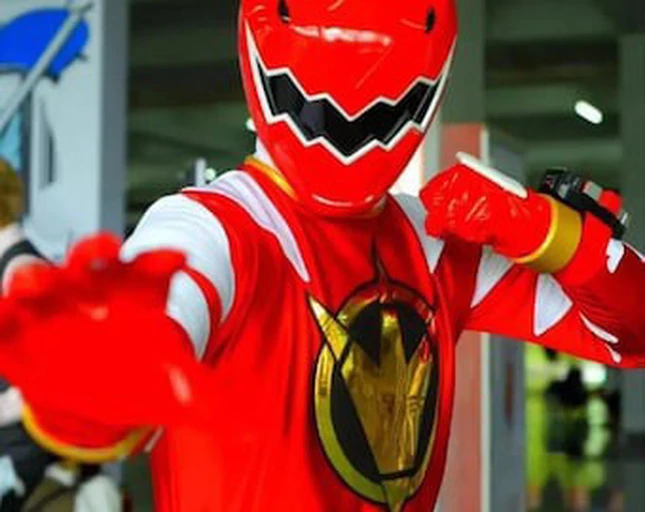
Sir Aeron Calenford VS The Crimson Ronin
The bell in the castle tower had stopped at the ninth stroke, and Sir Aeron Calenford knew that meant someone had cut the rope. He climbed the frost-slick stair with his shield…
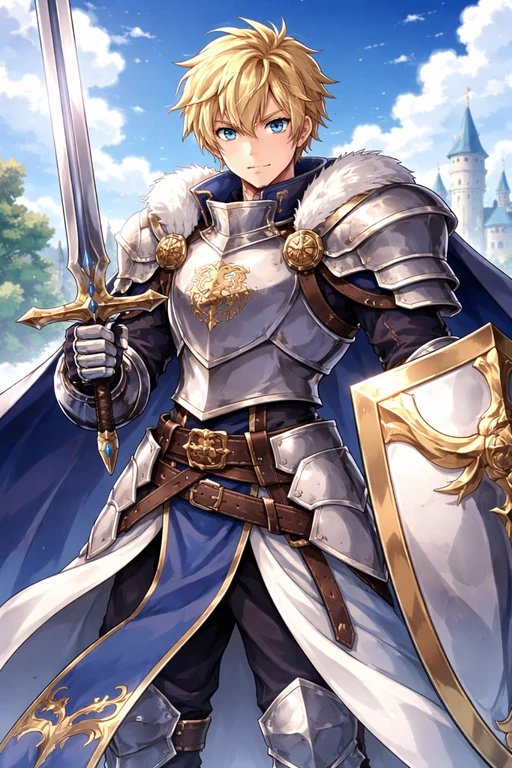
Characters in this tale
The bell in the castle tower had stopped at the ninth stroke, and Sir Aeron Calenford knew that meant someone had cut the rope. He climbed the frost-slick stair with his shield raised, its white face catching the last grey light, the boar's muzzle of the crest staring forward like a second watcher. Below him the town lay silent under a snowfall that had not been forecast, and every window he passed was dark, though he had seen candle flame in three of them from the courtyard.
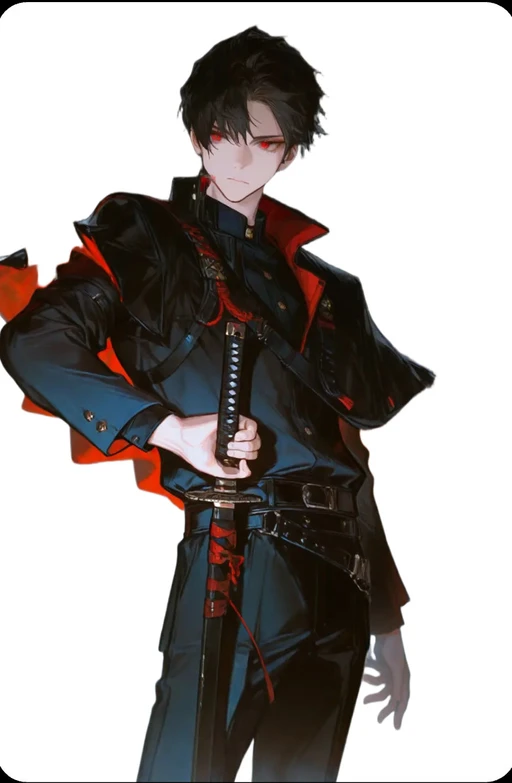
He had come for the reliquary of Saint Erin — a small iron box said to hold a single braid of hair — and he had been told he would find it alone. He was not alone. At the top of the stair, where the arcade opened on the frozen orchard, a figure in a long black trench coat stood with its back to him, one hand resting on the pommel of a katana. The coat's crimson lining moved in the wind like something breathing.
"You are not the sexton," the figure said, without turning. The voice was low and unhurried, each word placed like a stone in a wall.
"Nor are you," Aeron said. "I am Sir Aeron Calenford. I was told the reliquary would be unguarded."
"That is what I was told as well." The man turned. His eyes were red — not rimmed, not bloodshot, but red as banked coals — and whatever humor had been in his voice had gone out of it. "The Crimson Ronin. I have come to take the box. I will not explain why."
Aeron measured the distance between them: seven paces, the arcade's arches on his right, an open drop on his left. The information he had been given was wrong on both sides. That meant someone had wanted them here together, and the thought settled in his chest not as fear but as a cold, clarifying weight. He shifted his grip on the longsword, thumb finding the blue stone at the crossguard.
"Then we both have been lied to," he said. "That does not oblige me to let you pass."
"No," the Ronin agreed. "It does not."
He moved first. Aeron had expected the draw to be fast; he had not expected it to be silent. The katana left its sheath without a whisper and the first cut came low, angled for the gap beneath his shield arm, and Aeron only just brought the white shield down in time, the blade ringing off the gold rim and skidding away. The impact traveled up his forearm into his teeth. He answered with a thrust, disciplined and straight, but the Ronin was already gone from where he had been, coat flaring, and the second cut arrived from his left, higher this time, aimed at the seam between helm and gorget.
Aeron turned into it. The block cost him his footing on the ice; he felt his rear heel slide and corrected with a small, ugly stumble that a tournament master would have marked. The Ronin did not gloat. He simply readjusted, feet quiet on the frost, and pressed again — three cuts in the time it took Aeron to breathe once, each one a question asked at a different angle. The knight gave ground. The shield took two; the third he caught on the flat of his blade and turned aside, sparks hissing where steel kissed steel.
For a while the orchard heard only this: the ring and scuff and the labored breath of a man in plate. Aeron was stronger, and he knew it, but strength is a slow currency and the Ronin spent speed. He understood now that the man was not trying to kill him outright. He was testing the shield, the stance, the way Aeron's weight shifted when he was tired. The red eyes never left his shoulders.
Then Aeron saw it — not with his eyes but with the part of him that had been trained since boyhood to notice what an enemy protects. The Ronin kept his left side angled half a step too far forward, guarding the inside of his coat. Whatever he had come for, he had it already. He was not fighting to reach the box. He was fighting to leave with it.
That changed everything. Aeron stopped giving ground.
He planted the shield square, took the next cut on its face, and instead of retreating he drove forward behind it, shoulder low, using the plate and the boar-crest as a ram. The Ronin, built for angles, met the one attack he had not prepared for: weight. The shield struck him across the chest and drove him back through the arcade, boots skidding, one arm flung wide to keep his balance. For half a heartbeat the black coat hung open — and Aeron glimpsed the iron box, small and dull, tucked against the man's ribs.
"You have it," Aeron said, breathing hard. "You came here already knowing."
"I came here suspecting," the Ronin said, and for the first time something like respect moved behind the red gaze. "You suspected nothing. Yet you are the one who matters."
He came in again, and this time there was no testing in it. The katana traced a path that Aeron could not fully follow — a rising cut, a turn, a cut that seemed to come from behind the wind itself — and the shield's gold rim sheared away in a bright arc, spinning off into the dark. The white face of the shield split down the middle. Aeron felt the shock in his elbow and knew his defense was broken.
So he chose the only door left open to him.
He dropped the ruined shield, seized the longsword two-handed, and stepped inside the arc of the next cut before it could complete — not blocking, not parrying, but closing the distance until the samurai's longer reach meant nothing. The katana bit into his pauldron and stopped there, wedged in the gold-traced steel. Locked. And Aeron, with all the weight of plate and oath and the cold clarity of a man who has finally understood the trap he walked into, brought the crossguard of his sword up into the Ronin's wrist and wrenched the katana free of his grip.
The blade clattered across the frozen flagstones. The Crimson Ronin stood disarmed in the snow-light, coat torn, breath steady even now, and looked at the knight with those banked-coal eyes.
"Take it," he said quietly, and Aeron saw that the man's hand had not moved toward the box, or toward any hidden weapon. It simply hung at his side. "Take it, and know that you were never meant to win. You were meant to be here. So was I. Whoever set the rope to the bell wanted one of us to carry it out, and I suspect they wanted that one to be you."
Aeron did not lower his sword. "Step back."
The Ronin stepped back. He did not flee; he gathered his katana from the stones with the unhurried care of a man sheathing his own honor, and walked to the mouth of the arcade where the snow fell slantwise and the tower bell hung dead above them. There he paused.
"Guard it better than they guarded the bell," he said. Then he was gone down the stair, black coat and crimson lining folding into the dark like a page turned.
Aeron stood alone in the ruined arcade. He knelt — not in prayer, though his knees found the old habit — and lifted the iron box from where the Ronin had let it fall. It was lighter than he had expected. He braced it against the split shield's remaining straps, gathered both halves of the white wood under his arm, and began the long descent toward the sleeping town, toward whatever dawn the liars had not planned for.
The recorded ending
This encounter ended with Sir Aeron Calenford still standing.
This fictional story was generated by PicWar AI from player-created characters and a public battle for entertainment. It does not describe real people or events.Would you rewrite this ending?
Create a hero who could challenge Sir Aeron Calenford.
Start with a sketch or image, create your own hero in PicWar, then send it into a new battle story.