An arena chronicle
Leo VS Luz
The bell in the tower had not yet finished its third stroke when Leo understood the square would not remain empty for long. Morning light came low across the cobblestones, long and…
Characters in this tale
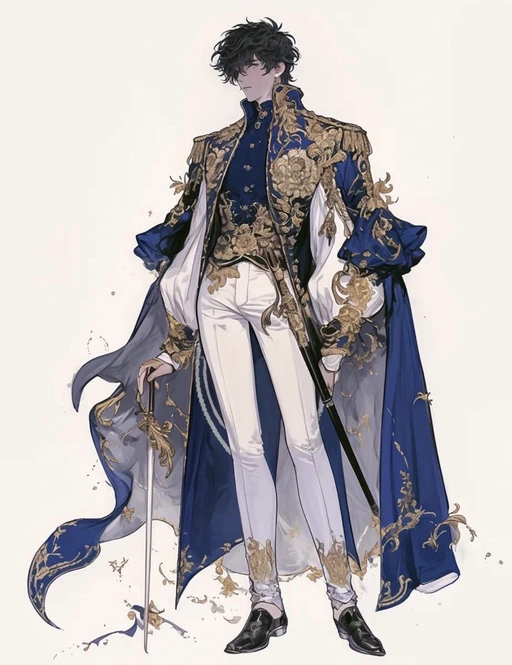
The bell in the tower had not yet finished its third stroke when Leo understood the square would not remain empty for long. Morning light came low across the cobblestones, long and pale, cutting the plaza into bands of glare and shadow, and in that swinging light the crowd was already thinning—market carts drawn back, shutters closing, somebody's dropped scarf tumbling end over end until it snagged on a fountain rim. He set the tip of his silver straight sword against the stone and let his black cane hang loose in his left hand, breathing evenly, watching the far archway where the sound of quick footsteps had begun to separate itself from the ordinary noise of the morning.
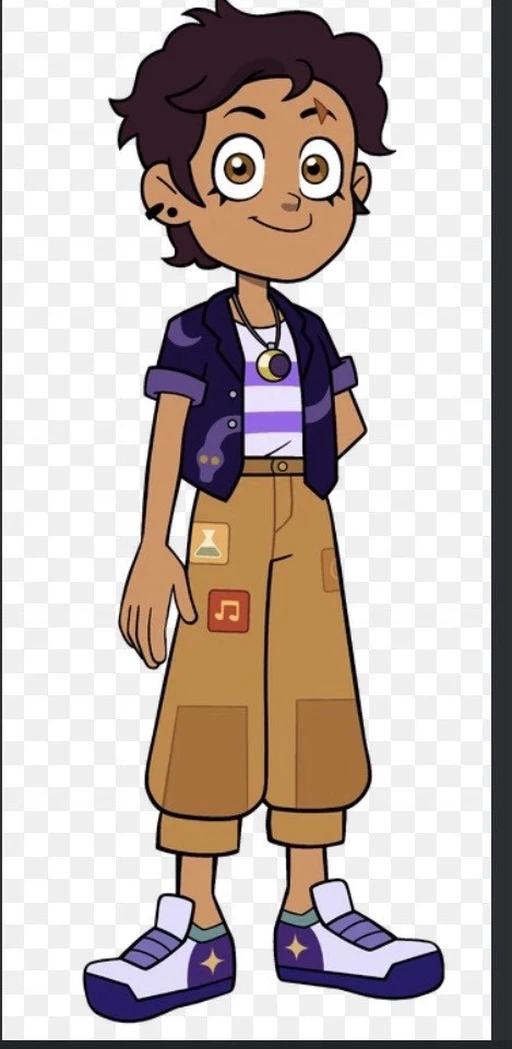
Luz came through it at a run, and she was smiling. That was the first thing, and it was disarming: short dark brown hair in disarray, a purple shirt open over stripes, cargo pants flapping with every stride, sneakers slapping the cobbles. The little star on her forehead caught the light as she veered wide instead of charging, and Leo read the veer correctly—she was not coming for him. She was coming for the space.
He advanced anyway, because that was how he fought: a measured walk, cane held across his body, blade low and patient. His coat's gold embroidery flashed as he turned his shoulders into the light, and he let the sun sit at his back where it would blind her. Luz squinted, laughed, and threw something underhand. A fistful of pale dust—flour from a baker's stall, he guessed—bloomed in the air between them, and the glare became a white wall.
Leo closed his eyes and stepped sideways on memory, cane sweeping a short arc at knee height. He felt it strike nothing. When the dust settled enough to see, she was gone from where she'd been, and the fountain behind him was ringing—she'd circled it, quick as a thought, and now she was at his flank with a coil of market rope in her hands.
The rope came whipping low. Leo parried with the cane, deflected the loop upward with the flat of his blade, and the two of them fell into a strange, shuffling dance around the fountain: her trying to tangle his ankles, hiss of rope and ring of steel, water spraying where her throws missed. He gave ground deliberately, trading space for angles, and when she overcommitted—one throw too eager, her weight tipping forward—he struck. Not with the edge. The flat of the sword cracked across her wrist, the rope spun away, and Leo's cane hooked her ankle and pulled.
She went down hard on her hip, rolled, and came up with her hands already raised, palms out, grinning through the sting. "Okay, okay—"
He did not press. That was his error, and some part of him knew it even as he straightened and lowered the point: she was not surrendering, she was buying a breath. Her eyes flicked past him, and Leo heard it a heartbeat late—the rumble of a cart, loosed from its chock at the top of the plaza's shallow slope, creaking into motion behind his back.
He turned. The cart was coming, and Luz was already moving, not toward him but along the fountain's rim, using the raised stone as a step to gain height. She leapt, caught the awning of the flower stall, swung, and landed on the cart's bed, and now she was riding it down at him with her arms spread for balance, a trickster's grin splitting her face.
Leo planted himself. The cobblestones trembled. He set his cane against the ground, braced, and when the cart came he met it with the flat of his sword jammed into the wheel's spokes—the wheel shrieked, the cart slewed, and the whole thing tipped and shuddered to a stop a pace from his chest. Petals rained. Luz, thrown from the bed, tucked and rolled and came up in a crouch, breathing hard.
For a moment the square was quiet, and in that quiet Leo saw her plan plainly: she was not trying to beat him. She was trying to exhaust the ground beneath him, to make the arena itself his enemy. And she was very good at it.
So he changed the arena.
He walked forward—fast now, no ceremony—and drove her not toward the fountain but toward the shadowed colonnade on the plaza's north edge, where the flagstones were dry and flat and the arches gave him walls. Luz backed, laughing less, her retreat narrowing. She snatched a length of bunting from a stall and whirled it to blind him; he let it fall across his blade and pulled it aside. She kicked a crate into his path; he stepped over it without breaking stride. The colonnade closed around them, and her cleverness, which had lived on open ground and borrowed momentum, had fewer places to hide.
She tried one last thing—a feint left, a dart right toward the gap between two pillars—and Leo was already there, cane planted crosswise in the gap, sword raised in a short, clean line. She stopped an inch from the silver point, chest heaving, and looked up at him.
He lowered the blade. "You've a talent for making the world trip me," he said, quietly. "I'd rather it didn't."
Luz blew out her cheeks, then laughed, and sat down on the flagstones with her back against the pillar. The fight was over, and the morning light had climbed the arches, and somewhere above them the bell finally finished its third stroke.
The recorded ending
This encounter ended with Leo still standing.
This fictional story was generated by PicWar AI from player-created characters and a public battle for entertainment. It does not describe real people or events.Would you rewrite this ending?
Create a hero who could challenge Leo.
Start with a sketch or image, create your own hero in PicWar, then send it into a new battle story.